Whole home vs point of use water filtration Annapolis MD homeowners consider is not a contest with one universal winner. The two approaches treat water at different locations and can serve different household goals. A good starting point is to describe what the household wants to address, where that concern is noticed, and what information can be confirmed before equipment is selected.
This guide compares the scope of whole-home and point-of-use treatment without promising that either approach solves every water concern. Water source, testing, plumbing layout, flow needs, installed equipment, maintenance, and manufacturer guidance can all affect the right recommendation. A professional should evaluate the property before a homeowner chooses a system based on a general comparison.
Start with the treatment goal, not the product name
Before comparing equipment, write down the question the household is trying to answer. Is the concern noticed at one drinking-water fixture, at more than one tap, during bathing, or in an appliance? Does the household want a clearer understanding of a taste or odor concern, a treatment option for a confirmed water issue, or help reviewing existing equipment? Those are different conversations.
Avoid beginning with a conclusion such as “we need a whole-house system” or “a small filter will fix it.” A product name does not establish whether the system fits the home's water conditions or the household's goals. The useful information is the observation, not a remote diagnosis.
The EPA's guide to selecting home water-treatment systems explains why selection and maintenance depend on the treatment goal, equipment capacity, certification information, and manufacturer instructions. That same principle applies when comparing treatment at one fixture with treatment at a home's incoming water line.
What whole-home filtration means in practice
Whole-home filtration is generally discussed as treatment installed where water enters the home, before water is distributed to fixtures. Because of that placement, the conversation may involve multiple fixtures and household water use. It does not mean every home needs the same equipment, media, capacity, or maintenance schedule.
For an Annapolis property, a whole-home conversation should include the home's plumbing access, household demand, existing treatment equipment, and the concern the household wants to address. A professional may need to confirm details that cannot be seen in a photo or guessed from a taste description. The installation location and available space can also matter.
Whole-home filtration may be worth discussing when the goal relates to water used throughout the property. That is not a guarantee that it is the best choice. It is one possible treatment scope to evaluate after the actual water concern and property conditions are understood.
What point-of-use filtration means in practice
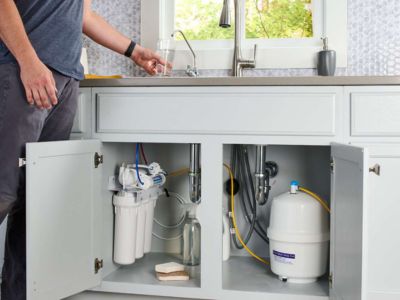
Point-of-use filtration is generally discussed as treatment at or near a specific fixture, such as a drinking-water location. The key distinction is scope: the equipment is intended for the water used at that point, not automatically every tap in the home.
This approach can be part of a focused conversation when a household concern is limited to a particular use. The right equipment, placement, and maintenance requirements still depend on the installed product and the treatment goal. A point-of-use option should not be described as a universal answer to every taste, odor, quality, or flow concern.
When reviewing a point-of-use system, ask what water it is intended to treat, what records or testing support that choice, and what service needs apply to the installed model. If a home already has equipment, a change in performance should be evaluated in the context of that system rather than treated as proof that a single component is due for replacement.
Compare scope with a simple household checklist
The most useful comparison is not a list of product claims. It is a set of questions that narrows the treatment scope safely:
- Where is the concern noticed: one fixture, several fixtures, or throughout the home?
- What is the household trying to address in plain language?
- Is there recent testing, a service record, or an installed-system manual to review?
- Are there existing filters, softeners, or other treatment components at the property?
- Has water pressure or flow changed, and if so, where and when?
- What space and plumbing access are available for an evaluation?
These questions do not diagnose the water or select equipment. They help a technician understand whether the conversation should focus on a single use point, a broader plumbing location, or further assessment before either option is recommended.
If the household is unsure where to begin, Heidler Plumbing's water-filtration systems page is a starting point for a property-specific discussion. The final recommendation should depend on confirmed conditions rather than a one-size-fits-all chart.
Do not overlook maintenance and flow
Every treatment system has its own maintenance needs. Filters, media, membranes, housings, and related components can have different requirements depending on the model, water conditions, configuration, and use. A calendar reminder or a neighbor's replacement schedule is not enough to decide what an installed system needs.
Likewise, water flow and pressure are system-specific. Equipment sizing, component condition, household demand, plumbing configuration, and maintenance can all matter. Do not assume that any filtration option will leave flow unchanged, or that a change in flow identifies one cause. A persistent change deserves a direct evaluation.
Keep manufacturer instructions, installation paperwork, and service records together. If those documents are not available, say so. A technician can identify what further information is needed without asking the household to dismantle a filter housing, alter a setting, or remove equipment.
Keep health and water-quality claims grounded
Water-treatment choices can touch health-related questions, which is one reason broad promises are risky. A chlorine-like taste, a change in appearance, or an online product claim does not establish what a home's water contains or what treatment will be appropriate. Do not rely on a general article to make a contaminant claim for a specific property.
If there is a concern about water quality, bring any available test information to the consultation and ask what it means for the home's treatment goal. If testing is needed, ask what scope and source will be useful. A clear process is more valuable than a promise that one filter type will address every possible issue.
For an urgent plumbing condition, such as active water, sewage exposure, or water near electrical equipment, do not wait for a filtration consultation. Seek prompt guidance for the immediate risk first.
Questions to ask during a filtration consultation
At the appointment, ask what concern was confirmed, what treatment scope is being considered, and what limits apply to the recommendation. You can also ask which installed components will need service, what records should be kept, and what change should prompt another call.
A useful question is, “Is this recommendation intended for one fixture or for water used throughout the home?” Another is, “What information about our water, plumbing, or household use supports that scope?” These questions keep the conversation focused on the property rather than a generic product comparison.
Avoid asking for a guarantee that a treatment system will solve every future water issue. Equipment and household conditions change. A clear service record and an explanation of the system's intended role are more useful over time.
The practical next step in Annapolis
Whole home vs point of use water filtration Annapolis MD homeowners compare should begin with the household's actual goal and the location of the concern. Whole-home treatment may be relevant when a property-wide scope is being evaluated, while point-of-use treatment may fit a more focused use. Neither choice should be made from a product label alone.
Contact Heidler Plumbing to discuss water-filtration options for an Annapolis home. Bring any records or test information you have, describe the concern plainly, and let the property conditions guide the next step.
