Whole-home vs point-of-use filtration Annapolis MD homeowners compare is not a contest with one universal winner. The two approaches treat water at different places, so the right questions begin with the household goal, where the concern appears, the available plumbing access, maintenance expectations, and the actual system under consideration. A taste, odor, residue, or fixture-specific question does not identify a substance or prove which treatment option belongs in a particular home.
This guide helps Annapolis homeowners prepare for a water-treatment conversation without promising a result. It does not diagnose water quality remotely, claim that a device removes every concern, or recommend a universal filter change interval. The EPA's home water-treatment guide emphasizes matching a product, its certification, capacity, and maintenance to the household's needs and manufacturer guidance.
Start with the treatment location
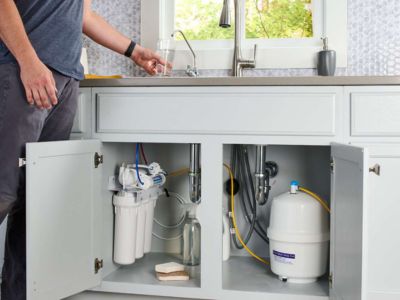
Point-of-use treatment is considered at a particular fixture or use point. A device at a kitchen sink, for example, has a different scope from equipment intended to treat water as it enters or moves through more of the home. Whole-home treatment is generally considered when the household is evaluating a broader treatment area. The location changes the planning questions about plumbing access, expected use, capacity, maintenance, and where the household wants treatment to occur.
Neither label tells you what a system will do in every property. A fixture-specific concern may call for a conversation about that fixture, while a broader household concern may require a wider assessment. The appropriate choice also depends on the water source, testing or documentation available, the installed plumbing, household demand, and the equipment specifications. Do not select a configuration solely because a product package uses the word “whole-home” or “premium.”
Define the household goal before selecting equipment
Write down what prompted the question. Is the concern limited to drinking water at one faucet? Does it involve a smell, visible residue, taste, appliance maintenance question, or a request from a household member? Is it consistent or intermittent? Notice where it occurs and whether cold and hot water appear differently, but do not use appearance or taste to declare what is in the water.
A clear goal gives an evaluator something real to work with. “We want to understand a concern at the kitchen sink” is more useful than “we need the best filter.” It avoids a purchase decision that is disconnected from the home, the water, and the intended use. It also allows Heidler Plumbing to discuss water-filtration systems in a way that fits the location and scope under consideration.
Do not assume that a product intended for one purpose will address every household question. Treatment options can have different media, membranes, capacities, installation requirements, and maintenance needs. The system has to fit both the treatment goal and the practical conditions at the property.
Compare installation and maintenance questions
Installation conversations should include the physical location, available access, plumbing configuration, and the space needed for service. Whole-home equipment may require a suitable point in the plumbing system and room for the equipment and ongoing maintenance. A point-of-use device may require different access near the fixture it serves. These are property-specific details, not a reason to alter piping or install equipment without an assessment.
Maintenance also varies. Filters, media, membranes, valves, and other components may have specific service requirements. Follow the guidance for the installed system rather than adopting an interval from a different home or online post. Water use, source conditions, system configuration, and the component itself can affect maintenance planning. A change in flow or performance should be evaluated in context rather than treated as proof that one part is always responsible.
Keep any manuals, product labels, testing records, or previous service notes together. Those documents can help a professional understand what is installed and how it has been maintained. If you do not have that information, say so; do not estimate a model, capacity, or treatment method.
Avoid water-quality promises from a general comparison
Water-treatment content becomes misleading when it claims a particular setup is “best,” guarantees a result, or says every home needs the same equipment. A system can only be selected responsibly after the goal, available information, installation context, and manufacturer instructions are considered. An advertised claim is not a substitute for an assessment of the home.
The same caution applies to water pressure or flow. Sizing, system condition, demand, configuration, and maintenance can influence what a household notices. A point-of-use or whole-home label by itself does not predict how water will behave at every fixture. If flow changes persist or there is uncertainty about the plumbing, request a system-specific review instead of modifying equipment to test a theory.
Prepare for a filtration consultation
Before contacting a plumber, gather straightforward information that is safe to access. A short preparation list can make a consultation more focused:
- The fixtures or rooms where the concern appears.
- Whether the concern is constant, occasional, or tied to a certain use.
- Any available water test results, product manuals, or service records.
- The location of existing treatment equipment, if any.
- Whether the household question is for drinking water, cooking, appliances, bathing, or broader use.
- Any observed change in water flow, taste, odor, or visible residue, described without diagnosing it.
Do not disassemble a filter housing, bypass installed equipment, or alter pipes to collect more information. If there is active leaking, water near electrical equipment, a suspected gas issue, significant sewage exposure, or another immediate hazard, prioritize appropriate emergency guidance rather than a routine selection conversation.
How Heidler Plumbing can help in Annapolis
Heidler Plumbing can discuss whole-home vs point-of-use filtration Annapolis MD homes may be considering by starting with the real household goal and the installed plumbing. An evaluation can distinguish between equipment location, treatment scope, maintenance planning, and the unanswered questions that require further information. It should not be framed as an automatic recommendation or a promise about a particular outcome.
For a consultation about water-filtration systems or to contact Heidler Plumbing, bring the records and observations you have. That makes it easier to compare options responsibly and avoid treating a generic product claim as a diagnosis.
Frequently asked questions
Is whole-home filtration always better?
No. Whole-home and point-of-use systems serve different treatment locations and household goals. The suitable approach depends on the property, the purpose, available information, equipment specifications, and maintenance planning.
Can I choose a system based on taste alone?
Taste is an observation, not a water-quality diagnosis. Record where and when it occurs, then discuss appropriate assessment or testing steps with a professional.
Do filters all have the same replacement schedule?
No. Follow the installed system's manufacturer guidance and the recommendations that apply to the equipment and home. Do not assume a general interval applies to every filter, media, or membrane.
A practical next step
Whole-home vs point-of-use filtration Annapolis MD decisions are easier when they begin with a precise question, not a universal claim. Record the household goal and the locations involved, preserve any records you have, and avoid changes that could affect the installed system. Then contact Heidler Plumbing for a conversation grounded in the actual home and water-treatment scope.
